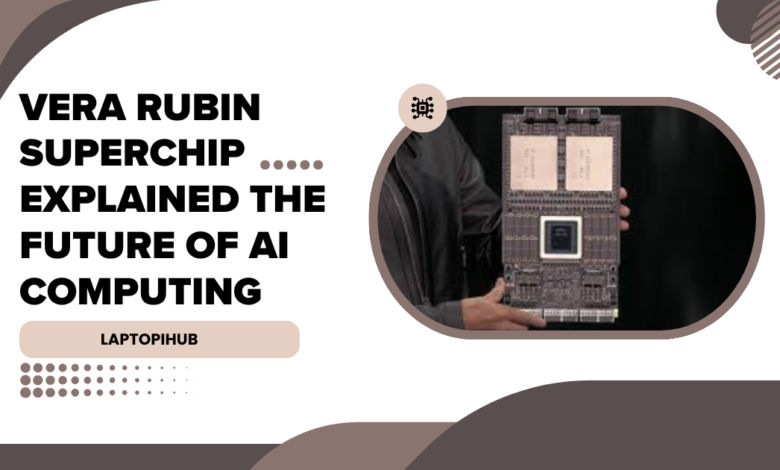
Vera Rubin superchip explained with architecture, performance gains, AI use cases, and why it matters for the future of computing.
Introduction to the Vera Rubin Superchip
The world of AI hardware is moving at lightning speed, and right at the center of this revolution sits the Vera Rubin superchip. If traditional GPUs were powerful engines, the Vera Rubin superchip is more like a rocket booster strapped to a data center. It’s designed not just to keep up with modern AI demands, but to stay ahead of them.
As AI models grow larger and workloads become more complex, conventional chip designs are starting to feel cramped. That’s exactly where Vera Rubin steps in—built to handle massive computations, extreme data throughput, and next-generation AI applications without breaking a sweat.
Why the Superchip Is Named Vera Rubin
The name Vera Rubin is no coincidence. Vera Rubin was a pioneering astronomer whose work reshaped our understanding of dark matter and the universe. In the same spirit, the Vera Rubin superchip aims to redefine how we understand computing power, uncovering performance once thought impossible.
It’s a tribute to innovation, discovery, and seeing beyond what’s immediately visible—just like modern AI.
The Vision Behind the Vera Rubin Architecture
At its core, the Vera Rubin superchip is built with one clear mission: scale AI efficiently. Instead of simply adding more cores or boosting clock speeds, the architecture focuses on smarter integration, faster communication, and balanced performance.
Think of it as redesigning a city—not by making buildings taller, but by creating better roads, faster transit, and smarter layouts.
What Is a Superchip
What Makes a Chip a Superchip
A superchip isn’t just a bigger processor. It’s a tightly integrated system of multiple chips working as one. This includes compute units, memory, and interconnects packaged together to behave like a single, ultra-powerful processor.
The result? Less bottlenecking, faster communication, and massive performance gains.
How Superchips Differ From Traditional GPUs
Traditional GPUs are powerful, but they often rely on external components and slower communication paths. Superchips eliminate many of these inefficiencies by bringing everything closer together.
GPU vs Superchip Performance Comparison
While a standard GPU is like a solo athlete, a superchip is a perfectly synchronized relay team—passing data instantly and never missing a beat.
Inside the Vera Rubin Superchip
Advanced Chiplet Design
One of the standout features of the Vera Rubin superchip is its chiplet-based design. Instead of one massive die, multiple smaller chiplets are connected seamlessly. This improves manufacturing yields and allows for flexible scaling.
It’s like building with LEGO blocks instead of carving from a single stone.
Next-Gen Interconnect Technology
Communication speed is everything. Vera Rubin uses advanced interconnects that allow chiplets to exchange data at blazing-fast speeds. This minimizes latency and ensures all components operate in harmony.
Memory Architecture and Bandwidth
Memory is often the silent bottleneck in AI systems. Vera Rubin tackles this head-on with ultra-high bandwidth memory placed close to compute units.
Why High Bandwidth Memory Matters
Imagine trying to drink from a firehose using a straw—that’s low memory bandwidth. Vera Rubin replaces the straw with a wide-open pipeline, feeding data as fast as the AI can process it.
Performance Leap Over Previous Generations
Vera Rubin vs Hopper Architecture
Compared to previous architectures, including Hopper, Vera Rubin delivers a significant jump in AI throughput. Training times are shorter, inference is faster, and efficiency is dramatically improved.
Power Efficiency Improvements
More power doesn’t have to mean more energy consumption. Vera Rubin is designed to do more work per watt, making it ideal for large-scale deployments where electricity costs matter.
AI Training and Inference Gains
From training massive language models to real-time inference, the Vera Rubin superchip handles both with ease. It’s built for versatility, not just raw speed.
Role of Vera Rubin in AI and Machine Learning
Large Language Models and Generative AI
Modern AI models are enormous, sometimes requiring trillions of parameters. Vera Rubin provides the computational backbone needed to train and deploy these models efficiently.
Scientific Computing and Research
From climate modeling to astrophysics, researchers need massive compute power. Vera Rubin acts as a digital microscope, revealing insights hidden within oceans of data.
Autonomous Systems and Robotics
Low latency and high reliability make the Vera Rubin superchip ideal for robotics and autonomous systems, where every millisecond counts.
Impact on Data Centers and Cloud Computing
Hyperscale Data Center Optimization
For cloud providers, Vera Rubin means higher density, lower costs, and better performance. Fewer chips can now do the work of many.
Reduced Latency and Energy Costs
By minimizing data movement and improving efficiency, Vera Rubin helps data centers reduce operational costs while improving service quality.
Vera Rubin and the Future of AI Hardware
How This Chip Redefines AI Infrastructure
Vera Rubin isn’t just an upgrade—it’s a new foundation. It signals a shift toward tightly integrated, AI-first hardware platforms.
What It Means for Developers and Enterprises
For developers, this means faster experimentation and deployment. For businesses, it means scalable AI solutions that grow without runaway costs.
Challenges and Limitations
Manufacturing Complexity
Advanced chiplets and interconnects don’t come easy. Manufacturing complexity remains a challenge, requiring cutting-edge fabrication techniques.
Cost and Accessibility
As with any high-end technology, initial costs may limit accessibility. Over time, broader adoption should help balance the scales.
Why the Vera Rubin Superchip Matters
The Vera Rubin superchip represents more than raw power—it represents smart power. It’s about efficiency, scalability, and preparing for an AI-driven future.
Conclusion
The Vera Rubin superchip is a bold step forward in AI computing. By combining advanced chiplet design, ultra-fast interconnects, and massive memory bandwidth, it sets a new benchmark for what AI hardware can achieve. Whether you’re training massive models, running cloud infrastructure, or pushing scientific boundaries, Vera Rubin is built to handle tomorrow’s challenges today.
Frequently Asked Questions (FAQs)
What is the Vera Rubin superchip used for?
It’s designed for AI training, inference, scientific computing, and large-scale data center workloads.
How is Vera Rubin different from a GPU?
Unlike traditional GPUs, it integrates multiple chiplets into a single high-performance unit.
Is the Vera Rubin superchip energy efficient?
Yes, it delivers higher performance per watt compared to previous architectures.
Who benefits most from the Vera Rubin superchip?
AI researchers, cloud providers, enterprises, and developers building large AI models.
Is the Vera Rubin superchip future-proof?
Its scalable architecture makes it well-suited for next-generation AI workloads.
Read More: Apple AirPods Pro 3 Complete Review